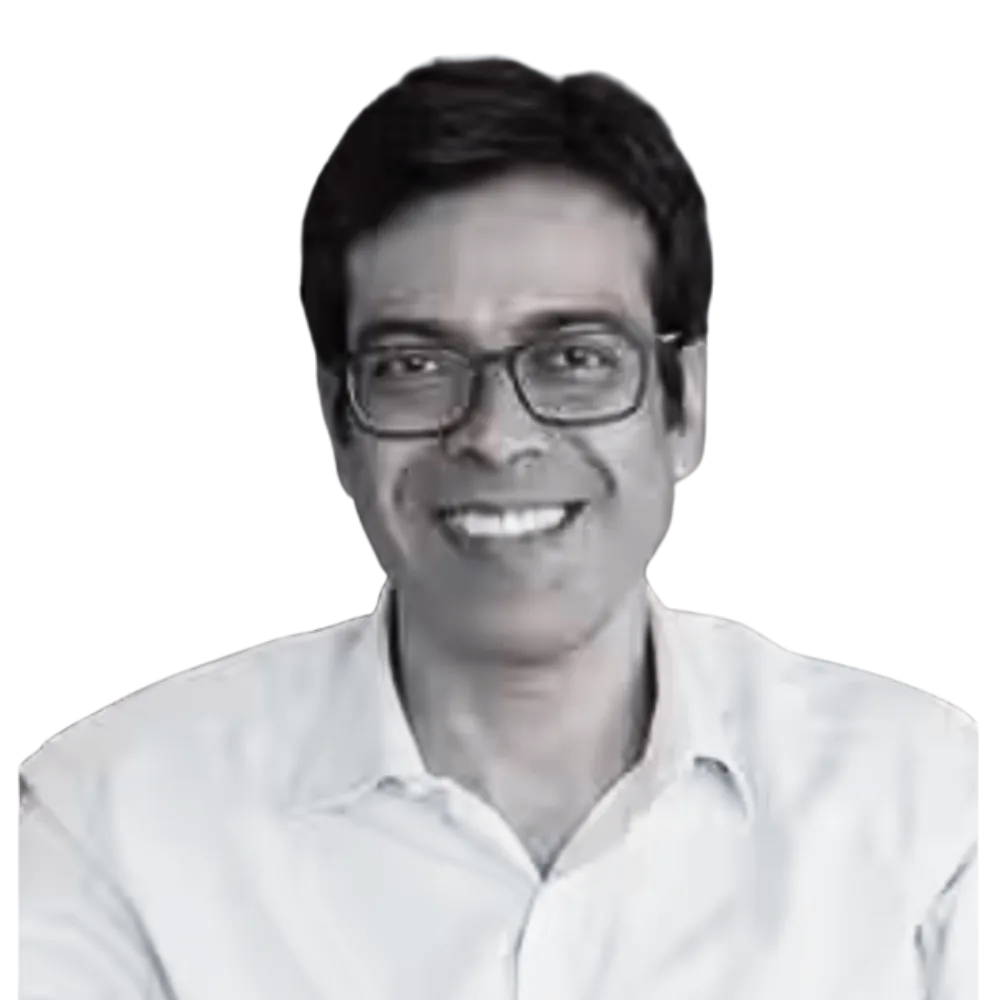
Vidya Niwas Khetawat
The person you want in the room before you talk to investors, not after.
Founders talk to investors. Vidya makes sure that conversation lands, with the right numbers, the right story, and the right structure already in place.
Not just the numbers. The narrative behind them.
IPO. Exit. Active operator. Each stage teaches something different about what capital actually looks for.
Vidya has spent his career on the side of the table that decides whether companies are fundable, and on the operating side that has to make them so. As CFO at Zaggle, he led the financial architecture through the full NSE IPO journey, from pre-listing structure through to public market readiness.
Before Zaggle, a successful exit from a clean energy startup, understanding both the build side and the transaction side of what makes a company worth acquiring or investing in. Currently operating Solargy, a commercial solar business backed by Japanese investors, bringing the same financial rigour to a capital-intensive growth business.
The financial model and investor narrative are built before the raise, not during it.
Most 0-to-1 companies don’t have a financial model. They have a spreadsheet the founder built to answer a specific question and then never updated. The gap between that and what a Series A room requires is structural, and it’s fixable, if you fix it before you walk in.
What an IPO, an exit, and an active business teach.
Pattern recognition from the full capital lifecycle, not one side of it.
Observation · Investor-sideFounders build financial models for themselves. Investors read them for entirely different signals.
The structural move
The model that works in a Series A room is designed backwards from what that room is actually looking for: unit economics, repeatability, capital efficiency, path to break-even. Most founders don't know what those questions are until it's too late to answer them cleanly. Build the model for the investor, not for yourself.
Consequence
The model is the narrative, not the numbers. If the numbers don't tell the story, they aren't doing their job.
Observation · Series-readinessFundraising is a process, not an event. Most founders treat it as an event.
The structural move
The companies that raise well start financial preparation 6–12 months before they need the capital. The companies that struggle start when they need the money. The difference isn't luck. It's whether the financial infrastructure was built to be investor-ready before the conversations started.
Consequence
Raise-readiness is built, not assembled under pressure. The CFO's job is to make sure there's nothing left to fix in the room.
Observation · IPO-backThe CFO who's been through an IPO knows what every earlier stage needs to look like.
The structural move
An IPO is the most rigorous financial audit a company will ever go through. Building backwards from that experience means understanding exactly what needs to be true at Series A for Series B to be possible, and at seed for Series A to be possible. The roadmap exists. Most founders just don't have access to it.
Consequence
Build backwards from where you're going. The financial architecture at each stage is predictable, if you know what the next stage requires.
Three stages. One through-line.
Zaggle · NSE-listed
CFO · Mumbai
Led the financial strategy through Zaggle's full NSE IPO journey. Built the financial infrastructure: model, narrative, investor relations, compliance architecture, that took the company from growth-stage to public market. The defining experience: what a business needs to look like at every stage before it can survive IPO scrutiny.
Clean Energy Startup
CFO · Successful exit
Experienced both the build side, structuring a business for investability, and the transaction side of what makes a company worth acquiring. Understanding the full capital lifecycle from early-stage to exit is what makes the financial architecture advice actionable, not theoretical.
Solargy
Founder & CEO · Commercial Solar · Mumbai
Commercial solar business backed by Japanese investors. Operating a capital-intensive growth business with institutional investors, applying the same financial rigour he brings to Praxis engagements. Still in the work, not just advising on it.
Praxis
Co-Founder · Fractional CFO · Mumbai
Fractional CFO practice for 0-to-1 stage founders alongside Arun Tyagi and Deepak Tyagi. Financial model and investor narrative built before the raise, not patched together during it.
In the room. Before it mattered.
Case studies coming. The record speaks through the IPO, the exit, and the companies currently being built.
Zaggle · NSE IPO
Full IPO financial architecture · Investor relations · NSE listing
Clean Energy Startup Exit
Financial structuring for investability · Successful exit transaction
In the room. Before the raise.
Vidya takes engagements through Praxis as the fractional CFO, embedded in the business before the capital conversations start, not parachuted in when they’ve already begun. The financial model, the investor narrative, the capital structure, the unit economics. These need to be built with enough time to pressure-test them.
The work begins with a diagnostic of the current financial state: what exists, what’s missing, what’s structurally wrong, and what the business needs to look like to survive a Series A room. If the gaps are closable, the work is designed around closing them. If they aren’t, that’s said directly and early.
Praxis takes on companies at the 0-to-1 stage: post-idea, pre-scale, working toward PMF and series readiness. The financial function needs to be built correctly before the raise, not cleaned up during it.
Role
Fractional CFO
Structure
Equity + Retainer
Stage
0-to-1 · Pre-scale · Series-ready
Mode
Embedded · Quasi-founding partner
Entry point
Financial diagnostic · No obligation
Markets
India · APAC · International
Zaggle
NSE IPO
NSE
Capital Markets
Solargy
Clean Energy
Japanese Investors
International Capital
SEBI
Regulatory
RBI Framework
Regulatory
Ind AS
Accounting
GAAP
Accounting
Financial Modelling
Core Expertise
Investor Relations
Core Expertise
M&A
Core Expertise
Fundraising
Core Expertise
Pre-Seed to IPO
Full Lifecycle
Commercial Solar
Active Sector
Fintech
Core Sector
Clean Energy
Sector Exit
India
Primary Market
Japan
Investor Base
One conversation. 45 minutes.
Bring the problem as it actually is, not the polished version. We’ll tell you what we see, what we’d do about it, and whether there’s a fit.
- 45-min diagnostic
- 0-to-1 stage
- Equity + retainer
- Milestone vesting
- India · APAC · Global